Sri Lankan food you have to try
Rice and curry, hoppers, kottu, lamprais, Jaffna crab curry and seven more Sri Lankan dishes worth ordering, with when to eat each one and where to find it.
By VisitLanka teamUpdated 8 min read
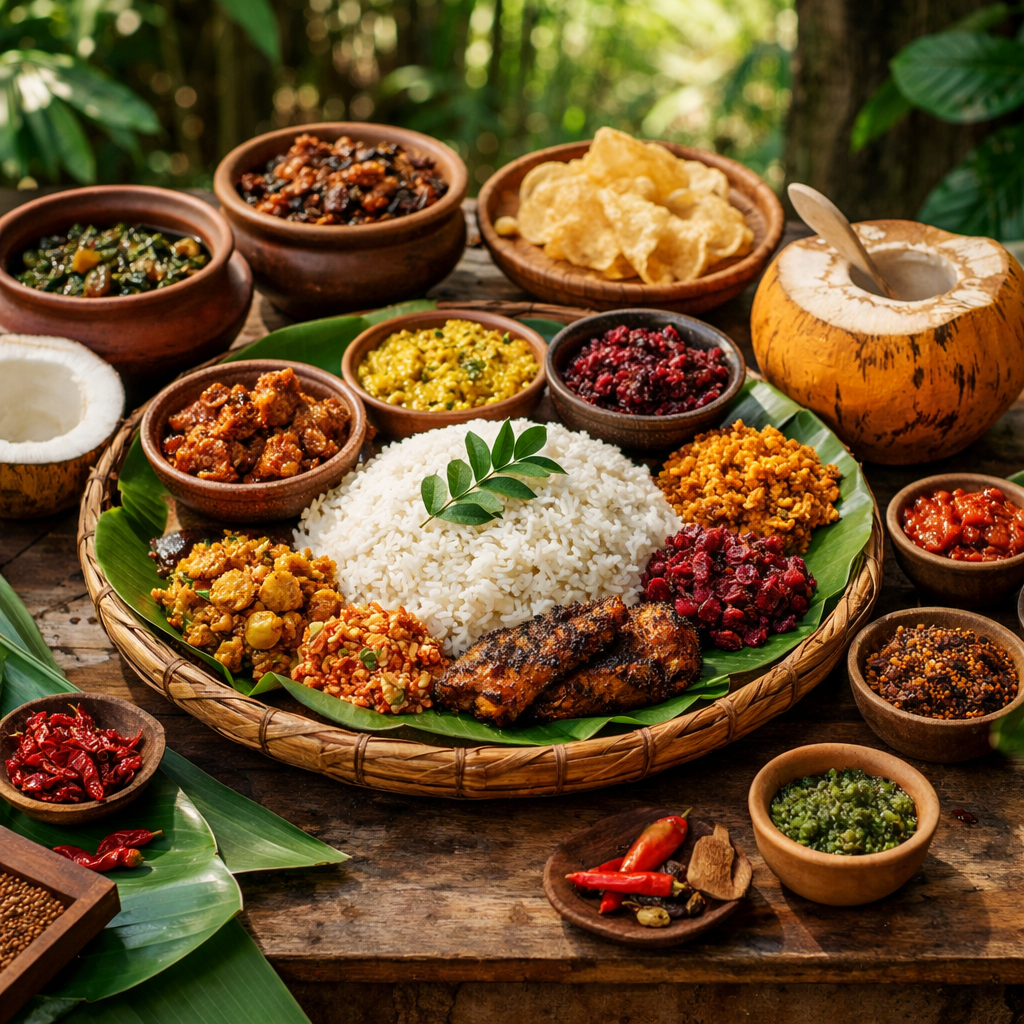
The Sri Lankan food to try first is rice and curry at lunch, hoppers in the evening and kottu roti late at night. Add lamprais in Colombo, ambul thiyal on the south coast, crab curry in Jaffna and curd with kithul treacle on the road south. Most of it is cheap, eaten with your right hand, and spicier than you expect, so ask for "less chilli" until you know your limit.
| At a glance | |
|---|---|
| Main meal | Rice and curry, usually at lunch |
| Breakfast and dinner | Hoppers, string hoppers, kottu, roti |
| Spice level | High by default; ask for less chilli |
| Vegetarian? | Very easy; most curries are vegetable or dhal |
| How locals eat | Right hand, mixing rice and curry together |
| No alcohol on | Poya (full moon) days, every month |
Rice and curry: the meal everything else orbits
Rice and curry is lunch for most of the island, and it's never one curry. You get a mound of rice with four to eight small dishes around it: dhal (parippu), a fish or chicken curry, a couple of vegetable curries, a mallung of shredded greens with coconut, papadam and pol sambol, the fiery fresh coconut relish that turns up at nearly every meal.
Each house and each "hotel" (in Sri Lanka that word often means a small local eatery, not a place to sleep) has its own version. Jackfruit curry, beetroot curry, cashew curry and a sweet, dark brinjal moju are the ones worth asking for by name.
Hoppers and string hoppers
Hoppers (appa) are bowl-shaped pancakes of fermented rice flour and coconut milk, crisp at the edges and soft in the middle. Order an egg hopper and the cook cracks an egg into the base so it sets as the pan spins. Tear the rim, scoop up some lunu miris (a red onion and chilli paste) and eat it while it's hot.
String hoppers (idiyappam) are different: little nests of steamed rice noodles, eaten ten or so at a time with dhal, a thin coconut gravy called kiri hodi and pol sambol. They're breakfast food in most homes and a gentle start if your stomach is still adjusting.
Kottu roti: the sound of dinner
You'll hear kottu before you see it. The cook chops flatbread, vegetables, egg and a meat or cheese option on a hot steel plate with two blunt blades, and the clatter carries down the street. It's Sri Lanka's late-night food: greasy, filling and built for sharing.
Cheese kottu is the tourist favourite. Chicken kottu with a little extra curry gravy poured over is what most locals order.
Kiribath with lunu miris
Kiribath is rice cooked in coconut milk, pressed flat and cut into diamonds. It's the dish for beginnings: the first morning of each month in many homes, weddings, and above all Sinhala and Tamil New Year in mid-April. On its own it's mild and slightly salty. With a smear of lunu miris it makes sense.
If you're travelling in April, you'll see it everywhere, along with oil cakes (kavum) and kokis, a crisp lace-like snack made with a flower-shaped mould.
Lamprais in Colombo
Lamprais comes from Sri Lanka's Dutch Burgher community. Rice cooked in meat stock is packed into a banana leaf with a mixed meat curry, frikkadels (meatballs), blachan (a shrimp paste sambol), seeni sambol (sweet caramelised onion), a boiled egg and ash plantain, then baked so the leaf perfumes everything inside.
It's a Colombo dish first. Burgher bakeries and a few long-running restaurants make it, and many households still treat it as a Sunday lunch. Order it a day ahead where you can, because the good places sell out.
Ambul thiyal on the south coast
Ambul thiyal is a dry, sour fish curry from the south, usually made with tuna and goraka, a dried fruit that gives it a tart, smoky edge. It was cooked to keep for days without a fridge, so it's dark, sticky and concentrated rather than saucy. Try it with rice in Galle and the fishing towns along the coast.
While you're on that coast, look for seer fish or prawns cooked simply in a red curry. Ask what came in on the boats that morning.
Jaffna crab curry and Tamil food in the north
Food in the north is its own cuisine. Jaffna crab curry uses lagoon crabs in a thick gravy built on roasted Jaffna curry powder, darker and hotter than southern curries, often with drumstick leaves and tamarind. Expect to get messy; it's eaten with your hands and a lot of napkins.
Also look for odiyal kool, a seafood broth thickened with palmyra root flour, and the cheap, excellent vegetarian thalis served on banana leaves.
Short eats and isso vadai
Short eats are Sri Lanka's snack culture: fish buns, Chinese rolls (crumbed and fried pancakes filled with spiced potato and fish or meat), patties, cutlets and vadai, all piled on a plate on your table at a bakery or tea shop. You eat what you want, and you pay for what's gone at the end.
Isso vadai is the street version on the beach. Lentil fritters are fried with whole prawns pressed on top and served with a chopped onion and chilli salad. The Galle Face Green promenade in Colombo fills with these carts from late afternoon.
Curd and treacle
Buffalo curd set in unglazed clay pots is one of the island's best desserts. Thick, sour and cold, it's eaten with kithul treacle, a syrup tapped from the fishtail palm that tastes somewhere between maple syrup and caramel. You'll see stacks of clay pots at roadside stalls in the south, especially on the way to Yala around Tissamaharama.
Watalappan
Watalappan is a steamed coconut custard made with jaggery (palm sugar), cardamom and sometimes cashews. It came to Sri Lanka with the Malay and Muslim communities and is the dessert of Eid, but restaurants serve it all year. Dense, dark and not too sweet, it's the best way to finish a rice and curry meal.
What to drink
Start with king coconut (thambili), the orange-skinned coconut sold at almost every roadside stall. The vendor slices off the top and hands you a straw. It's the island's real hangover and heatstroke cure.
Ceylon tea is the obvious second. Locals drink it strong and milky, often very sweet, so ask for "less sugar". For a proper cup and a look at where it comes from, spend a night in Nuwara Eliya in the tea country. Ginger beer and arrack (a spirit distilled from coconut palm sap) round things out, but remember that bars and shops won't sell alcohol on Poya days.
How to eat well in Sri Lanka
- Eat with your right hand, mixing rice and curry with your fingertips. Cutlery is always available if you prefer it; nobody minds.
- Ask for less chilli early. "Spicy" in a tourist restaurant can still mean very spicy. Pol sambol and lunu miris are the hottest things on the plate.
- A busy local eatery with a queue at lunch turns over its food fast. Drink bottled or filtered water.
- Take a cooking class or food tour. The fastest way to understand the curries is to cook them. Browse culinary experiences on VisitLanka or contact cooking class and food tour hosts directly.
Want to eat your way across the island? Add the towns above to your trip plan and see them on a map: Start planning your trip.
Frequently asked questions
What is the national dish of Sri Lanka?
Rice and curry is the closest thing to a national dish. It's a plate of rice with several small curries, usually dhal, a meat or fish curry, a few vegetable curries and pol sambol. Most Sri Lankans eat it every day at lunch.
Is Sri Lankan food very spicy?
Yes, much of it is hotter than Indian food served abroad, especially sambols and southern fish curries. Ask for less chilli when you order, and use rice, dhal and curd to cool things down. Kiribath, string hoppers and watalappan are mild.
Is Sri Lanka good for vegetarians and vegans?
Very good. Most curries are made from vegetables, lentils or fruit like jackfruit, and coconut milk replaces dairy in many dishes. Check whether a curry contains Maldive fish (dried tuna flakes), which is often added for flavour, and say you want it without.
What should I eat for breakfast in Sri Lanka?
Try string hoppers with dhal and coconut gravy, hoppers with lunu miris, or kiribath. Guesthouses often offer a Sri Lankan breakfast if you ask the night before, and it's almost always better than the toast-and-eggs option.
Where can I try Sri Lankan street food?
Galle Face Green in Colombo is the classic spot for isso vadai and other snacks at sunset. Any town's main street will have kottu stalls and hopper pans in the evening, and bakeries serve short eats all day.
For the dishes you liked best, find restaurants, cafes and cooking classes near your stops and message them directly, with no middlemen: browse Food & Dining on VisitLanka. When you're ready, plan your Sri Lanka trip on VisitLanka.