We use cookies to improve your experience and understand how the site is used. See our Cookie policy.
Things to do in Yala: leopard safaris in Yala National Park, Sithulpawwa rock temple, Kataragama, Bundala birdlife and when to visit the south-east coast.
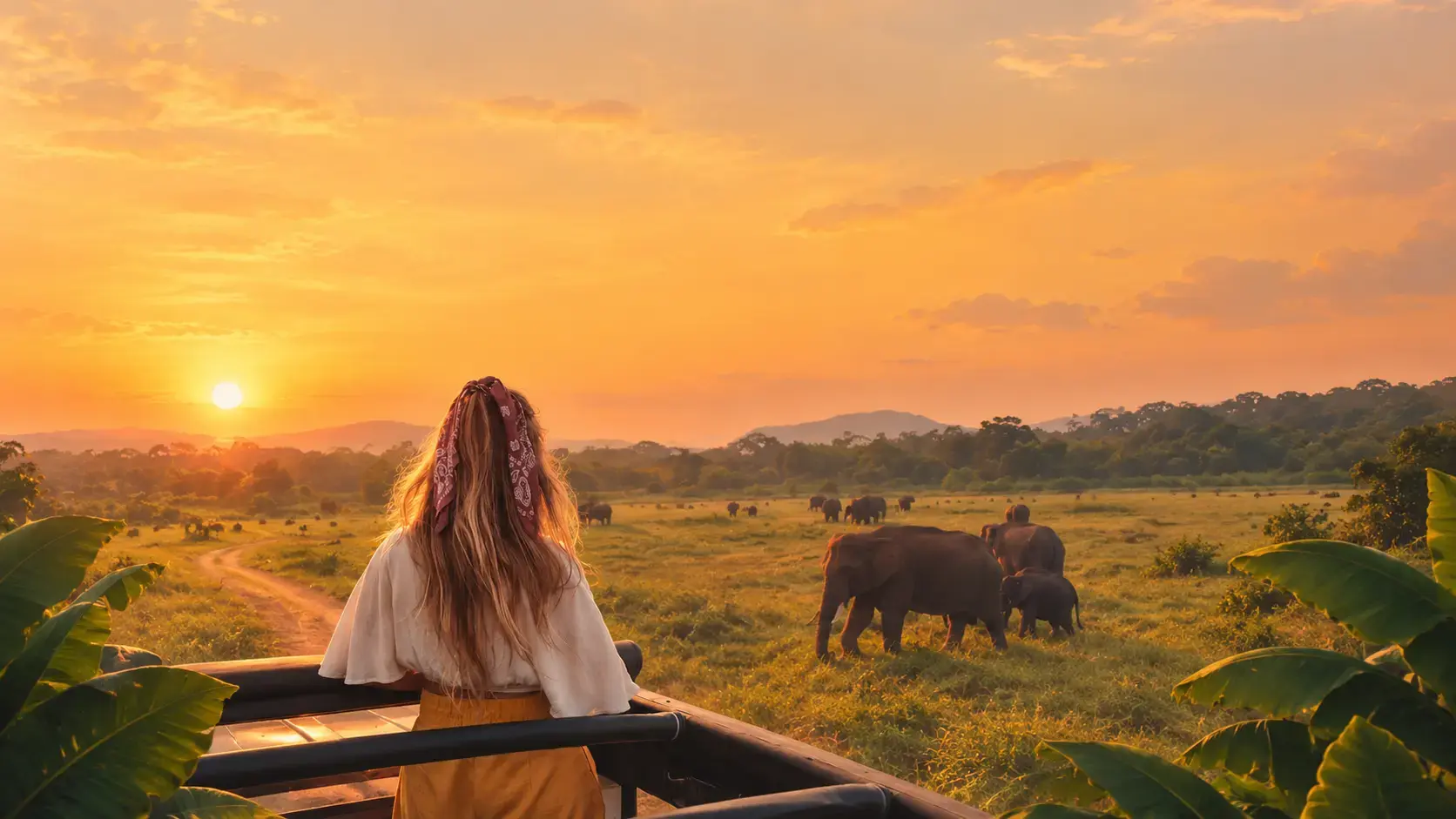
Yala National Park is Sri Lanka's best-known wildlife park and the most reliable place on the island to see a leopard. It covers about 979 km² of dry scrub, lagoons and granite outcrops on the south-east coast, a short drive from Tissamaharama. Most people base themselves in Tissa or Kirinda for one or two nights and do a sunrise jeep safari. If you are looking for things to do in Yala, the park is the main event, with old temples and a second wetland park close by.
Yala National Park is split into blocks. Block 1, entered through the Palatupana gate, has the highest leopard density and the most jeeps. Blocks 5 and 6 are quieter, with fewer sightings but far less queuing. Sloth bears, elephants, mugger crocodiles, spotted deer and more than 200 bird species live here, and the painted storks and peacocks on the lagoons are worth the trip on their own.
Gates open at 6am. A morning safari runs until mid to late morning and an afternoon one from early afternoon until the park closes around 6pm. A full day is possible if you bring food and water, and it lets you stay at a sighting while other jeeps leave for lunch. Book a jeep and tracker through safari operators based near Yala.
Block 1 usually closes for a few weeks in the dry season, roughly September to mid-October, so animals get a break and the water holes recover. In 2026 Blocks 1 and 2 were shut from 14 September to 15 October. Check with the Department of Wildlife Conservation before you book for those months.
Sithulpawwa Rock Temple is a monastery from the 2nd century BC, set on rock outcrops inside the park boundary. You climb a bare rock face to a white stupa with views over the forest canopy, and the cave shrines below hold old paintings and reclining Buddha images. It is a working temple and a big pilgrimage site, so dress for it: shoulders and knees covered, shoes off.
The sacred town of Kataragama is about 20 km north of Tissa. Buddhists, Hindus, Muslims and the Vedda people all worship here, at the Maha Devale shrine to the god Kataragama (Skanda-Murugan) and at the white Kiri Vehera stupa nearby. The evening puja brings drums, fruit offerings and crowds walking across from the Menik Ganga river. The Esala festival in July or August adds fire walking and nightly processions.
Tissa is where most visitors sleep. The Tissamaharama Raja Maha Viharaya stupa, built around the 2nd century BC and about 47 m tall, is the largest in the south. Walk round it at dusk, then head to Tissa Wewa, the old reservoir, where egrets roost in the trees along the bund road.
The small fishing village of Kirinda sits on the coast 10 km south of Tissa. Kirinda Raja Maha Viharaya tops a boulder above the beach, linked by legend to Queen Viharamahadevi, who is said to have come ashore here. The sea here is rough, so look but do not swim.
West of Tissa, Bundala National Park was Sri Lanka's first Ramsar wetland. Around 200 bird species have been recorded, and in the northern winter flocks of greater flamingos feed in its salt lagoons. It is calmer than Yala and a good half-day if you like birds.
From Colombo, the Southern Expressway to Hambantota then the coast road gets you to Tissa in about 4 to 5 hours. From Ella it is roughly 2.5 to 3 hours downhill through Wellawaya. There is no train, so most people hire a driver for the south and hill country. Find a guesthouse or safari lodge in Tissa or Kirinda and plan the stay around a dawn safari.
February to June is the best stretch: dry, with animals gathering at the water holes. The north-east monsoon brings rain from about October to January, which turns the park green but can make tracks muddy. It is hot all year, so bring a hat, sunscreen, binoculars and a scarf for the dust.
Add Yala to your route and see it on a map with your other stops: start planning your trip.
Yala