Jaffna, Sri Lanka
- Tamil Culture
- Hindu Temples
- Island Hopping
Things to do in Jaffna: Nallur Kandaswamy temple, Jaffna Fort, island ferries to Nainativu and Delft, Point Pedro, local food and the train from Colombo.
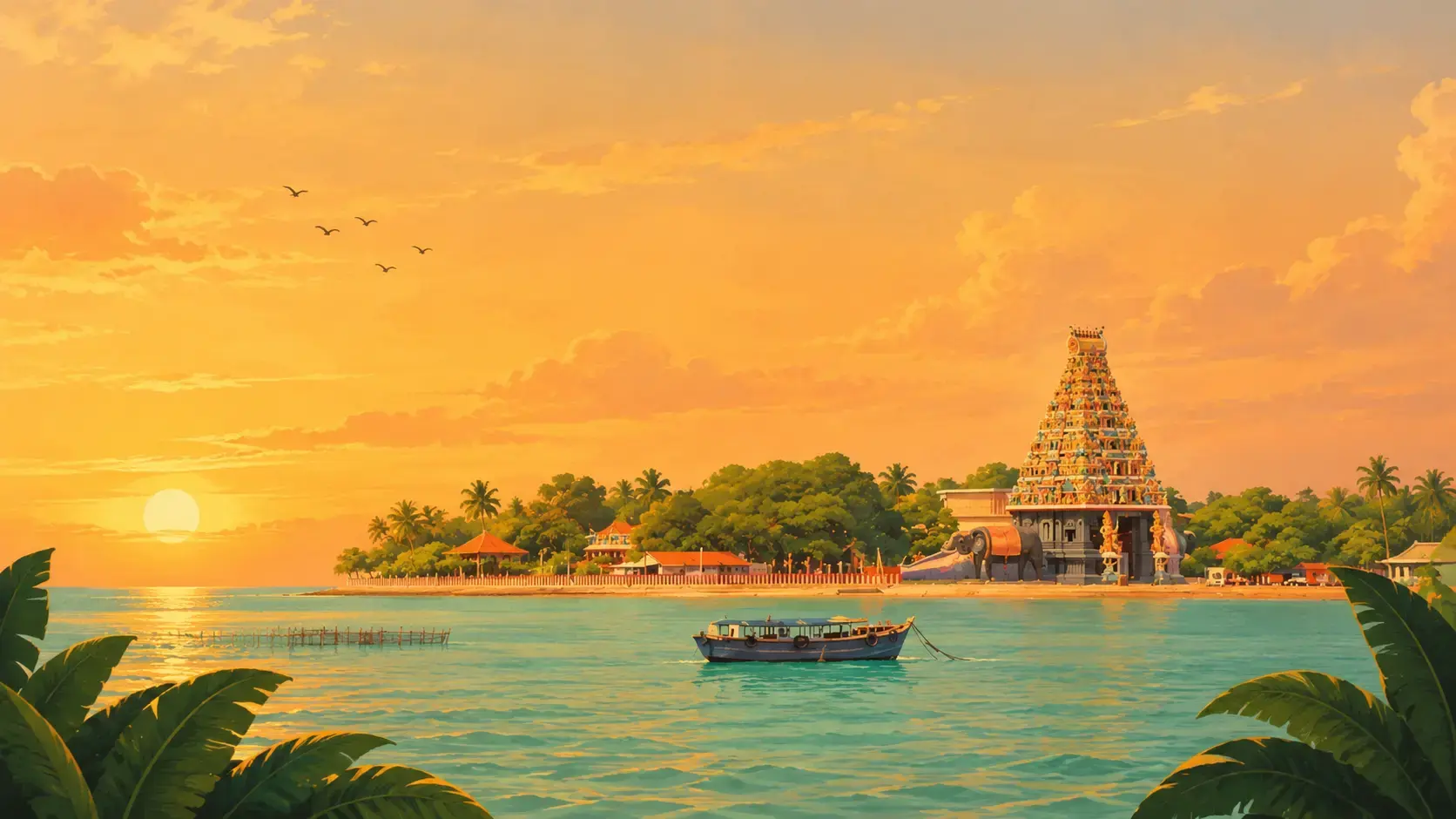
Jaffna is the cultural capital of Sri Lanka's Tamil north, a flat, hot peninsula of palmyra palms, lagoons and Hindu temples about 396 km from Colombo. Travellers come for Nallur Kandaswamy temple, the Dutch-era fort, ferry trips to Nainativu and Delft islands, and food you won't find in the south. Give it three nights: one day in town, one on the islands and one around the peninsula.
Start at Nallur Kandaswamy Temple, the most important Hindu temple in the north. The present building dates from 1734 and its golden gopuram towers over the town. Every year it holds a 25-day festival that ends with the chariot procession; in 2026 the chariot day fell on 9 September, and the town fills with pilgrims from across the island and abroad.
West of the centre, Jaffna Fort was built by the Portuguese from 1618 and rebuilt by the Dutch, who took it in 1658, as a pentagonal fort on the lagoon. Parts were damaged during the war and have since been restored, and you can walk the ramparts at sunset. A short walk away, the white Jaffna Public Library opened in 1933, burned in 1981 with most of its collection, and was rebuilt in the early 2000s. It's a working library and a place locals hold close, so visit quietly.
The islands are the best day out. Causeways run west to Kurikadduwan jetty on Punguduthivu, about an hour from town, where boats cross to Nainativu. The island has two shrines a few hundred metres apart: the Hindu Nagapooshani Amman Temple and Nagadeepa Purana Vihara, one of the sixteen holiest Buddhist sites in Sri Lanka. From the same jetty, a longer crossing of about an hour reaches Delft Island, with wild ponies, coral-stone walls, a baobab tree and the ruins of a Dutch fort.
Places in Jaffna, Sri Lanka
Loading map…