How to plan a Sri Lanka trip in 2027: step by step
Planning a Sri Lanka trip for 2027? Pick your month and coast, decide how many days you need, apply for your ETA (free for 40 countries) and book early for peak season.
By VisitLanka team9 min read
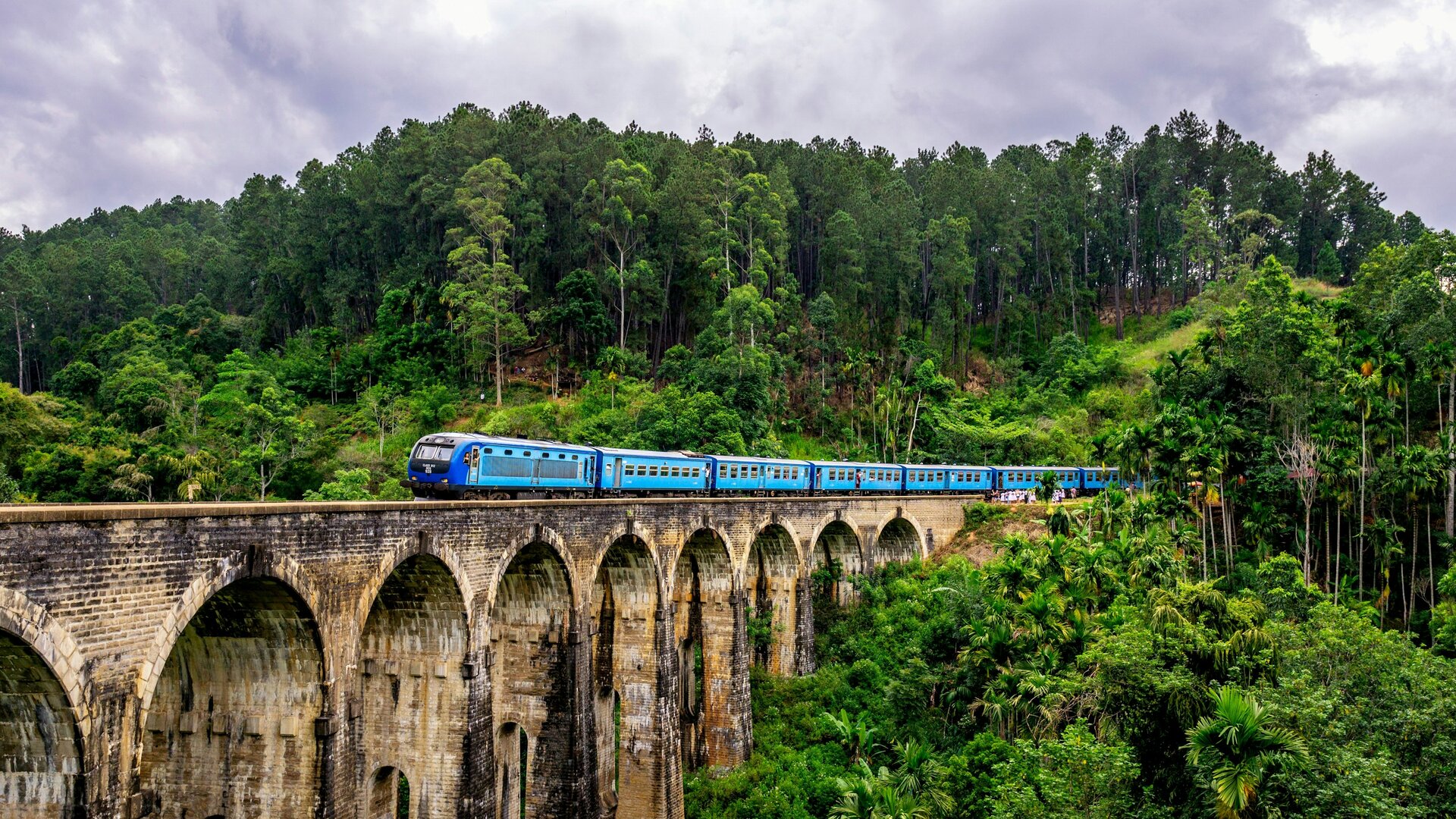
Planning a Sri Lanka trip for 2027 comes down to five decisions, made in this order: when you'll go, which coast suits that month, how long you have, how you'll get around, and what to book ahead. Most first-time visitors need two weeks. Apply for your ETA online before you fly (it's free for 40 nationalities, including the UK, US, Germany and Australia) and book rooms and drivers early if you're going in peak season.
Sri Lanka 2027 at a glance
| What you need to know | The short answer |
|---|---|
| Entry | Online ETA before arrival; free 30-day tourist ETA for 40 countries since 25 May 2026 |
| Best months, west and south coast | December to April |
| Best months, east coast | May to September |
| Ideal trip length | 10 to 14 days for a first visit |
| Getting around | Private driver, train, bus or a mix |
| Main airport | Bandaranaike International Airport (CMB), near Negombo |
| Currency | Sri Lankan rupee (LKR); carry cash for tuk-tuks and small places |
| Plug type | Mostly type D and G; bring a universal adapter |
Step 1: Pick your month (and your coast)
Sri Lanka has two monsoons, so there's almost always a dry coast somewhere. The southwest monsoon roughly covers May to September and soaks the west coast, the south coast and much of the hill country. The northeast monsoon arrives around October or November and lasts until about February or March, bringing rain to Trincomalee, Pasikudah, Arugam Bay and the north.
That gives you a simple rule:
- December to April: base your beach time in the south (Galle, Unawatuna, Mirissa, Tangalle). This is peak season, so book earlier.
- May to September: head east to Trincomalee, Nilaveli or Arugam Bay, which is the surf season there.
- October and November: the in-between months. Expect showers on both sides and lower prices.
Timing shifts a little every year, so treat these as tendencies, not promises.
Festivals are worth planning around too. The Kandy Esala Perahera usually runs from late July into mid-August; the Temple of the Sacred Tooth Relic (Sri Dalada Maligawa) announces exact dates a few months ahead, and Kandy's rooms fill fast once it does. Vesak, the biggest Buddhist festival, falls on 19 May 2027, when towns hang lanterns and roadside stalls hand out free food.
Every full moon is a Poya day, a public holiday when alcohol sales stop and many bars close. The 2027 Poya days fall on 22 January, 20 February, 22 March, 20 April, 19 May, 18 June, 18 July, 16 August, 15 September, 15 October, 13 November and 13 December.
Step 2: Decide how long you need
Two weeks is the sweet spot for a first trip. Roads are slower than the map suggests (hill-country driving averages around 30 to 40 km per hour), so a single transfer can eat most of a day.
| Trip length | What fits comfortably |
|---|---|
| 7 days | Cultural Triangle (Sigiriya, Dambulla), Kandy, then the south coast. No time for Ella. |
| 10 days | The classic loop: Sigiriya, Kandy, Ella, a safari, then 2 to 3 days on the south coast. |
| 14 days | The same loop at a slower pace, plus Nuwara Eliya or a few extra beach days. |
| 3 weeks | Add the east coast or Jaffna and the north, which most short trips skip. |
Not sure which places to pick? Our Sri Lanka travel guide 2027: the places worth your time covers where to go; this guide covers how to plan around it.
The most common mistake we see is trying to fit Sigiriya, Kandy, Ella, Yala and the beach into a week. You'll see all of it from a car window. Pick four bases at most for 10 days.
Want to see your route on a map before you commit? Start planning your trip and add each stop to your itinerary.
Step 3: Sort out entry and paperwork
Every visitor needs an Electronic Travel Authorisation (ETA) approved before they land. Apply on the official portal at eta.gov.lk, which is run by the Department of Immigration and Emigration.
Since 25 May 2026, nationals of 40 countries get a free 30-day tourist ETA. The list includes the UK, the US, Canada, Australia, New Zealand, Germany, France, India, China and Japan. Your 30 days start on the day you first arrive, and the ETA allows a second entry inside that same window (handy if you're adding the Maldives). If your country isn't on the list, the standard ETA fee applies, and anyone staying longer than 30 days can apply for a paid extension.
The rest of the paperwork:
- Check your passport is valid for at least six months beyond your arrival date.
- Buy travel insurance that covers motorbike or tuk-tuk use if you plan to ride, and adventure activities like white-water rafting.
- See a travel clinic six to eight weeks before you go for vaccinations and mosquito advice. Dengue is present year-round.
- Read your own government's travel advice (the UK FCDO, the US State Department or your country's equivalent) shortly before you fly.
Step 4: Choose how you'll get around
This is the decision that shapes your trip more than any other.
Private driver
Most first-time visitors hire a driver for the whole trip or for the long legs. It's the fastest way to link Sigiriya, Kandy and Ella, your bags stay in the car, and a good driver doubles as a guide. Book a few weeks ahead for December to March. You can compare drivers and car hire on VisitLanka and message them directly, with no booking commission.
Train
The hill-country line through Kandy, Nanu Oya and Ella is the train journey most visitors put first on their list. Many travellers use it for one scenic leg and a driver for the rest. Check the latest timetable with Sri Lanka Railways before you plan around it.
Bus
Cheap, frequent and an experience in itself. Fine for short hops and for travellers with light bags; less fun on six-hour hill-country rides.
Tuk-tuks and ride apps
In Colombo and Kandy, PickMe and Uber both work and save you haggling. Elsewhere, agree the fare before you get in.
Step 5: Book the right things early (and leave the rest)
Not everything needs booking months out. Here's how we'd split it for a December to March trip:
| Book 2 to 3 months ahead | Book 1 to 2 weeks ahead | Book on the day |
|---|---|---|
| Flights | Safari jeeps | Tuk-tuks |
| Rooms in Ella, Mirissa and Galle | Day tours and guides | Most restaurants |
| Rooms in Kandy during the Perahera | Cooking classes | Temple visits |
| Your driver, if you want a specific one | Whale watching | Short bus rides |
For safaris, Yala National Park is the most famous park and the busiest. Udawalawe is better for elephants, Minneriya hosts the elephant gathering from roughly July to October, and Wilpattu is quieter if leopards matter more to you than crowds. Yala usually closes for part of September and October, so check before you lock in dates. Look for a safari operator who keeps distance from the animals and won't race other jeeps to a sighting.
Places to stay range from family guesthouses to boutique hotels and eco-lodges. You can find hotels, guesthouses and villas by area and contact the owners directly.
Money, SIM cards and connectivity
ATMs are easy to find in towns and at the airport. Cards work in most hotels and larger restaurants, but you'll need rupees for tuk-tuks, small shops, temple donations and anything rural. Tell your bank you're travelling so your card isn't blocked on the first withdrawal.
Buy a local SIM in the arrivals hall at the airport. Dialog and SLT-Mobitel both sell tourist packages with plenty of data, and coverage is good across most of the island. You'll need your passport.
Know before you go
- At temples, keep shoulders and knees covered and take shoes and hats off at the entrance. Never pose with your back to a Buddha statue, and keep any Buddha tattoos covered.
- Ask before photographing people, especially monks. The stilt fishermen near Koggala now mostly pose for tips, so expect to pay if you photograph them.
- Skip elephant rides and shows, and don't feed monkeys or wild elephants by the road.
- Start sightseeing early. Sigiriya's steps are far easier at 7am than at noon.
- Be polite and firm with anyone at a station or temple who offers to "help" with tickets or says a site is closed.
Common mistakes when planning a Sri Lanka trip
- Choosing the wrong coast for the month. Mirissa in July and Trincomalee in December both mean a lot of rain.
- Packing too much into too few days. Five hours of driving in a day is the realistic limit if you also want to see something.
- Forgetting Poya days. If your one night in Galle falls on a full moon, the bar you planned may be dry.
- Using an unofficial ETA site. Apply on eta.gov.lk only.
Official sources to check before you go
Rules change, so check these close to your departure: the Department of Immigration and Emigration ETA portal for entry rules and the list of free-ETA countries, Sri Lanka Railways for train services and seat bookings, and the Sri Lanka Tourism Development Authority for registered guides and accommodation.
Frequently asked questions
Do I need a visa for Sri Lanka in 2027?
Yes, every visitor needs an ETA approved before arrival. Nationals of 40 countries, including the UK, US, Australia and Germany, get a 30-day tourist ETA for free; others pay the standard fee. Apply only on eta.gov.lk.
How many days do you need in Sri Lanka?
Two weeks is ideal for a first visit. Ten days covers the Cultural Triangle, Kandy, Ella, a safari and the south coast at a steady pace; a week means dropping Ella or the beach.
What is the best month to visit Sri Lanka?
January to March is the best all-round window for the west and south coasts, the hill country and the Cultural Triangle. If you're travelling between May and September, base your beach days on the east coast instead.
Is it better to hire a driver or travel by train in Sri Lanka?
A driver is faster and easier for most first-timers, especially with limited days. The train is cheaper and more memorable, so many travellers mix the two: a driver for the long legs and a train ride for the hill-country stretch.
Is Sri Lanka safe for tourists in 2027?
Most visits are trouble-free, and the main risks are everyday ones: road safety, heat, dengue and the odd scam. Read your government's latest travel advice before you fly and buy insurance that covers your activities.
Save the places you like, add a driver for the long legs, and send enquiries to local businesses straight from your itinerary: plan your Sri Lanka trip on VisitLanka.