We use cookies to improve your experience and understand how the site is used. See our Cookie policy.
Things to do in Sinharaja: endemic birding walks, Sinhagala and Moulawella peaks, Pitadeniya waterfalls, which entrance to use and the best months to go.
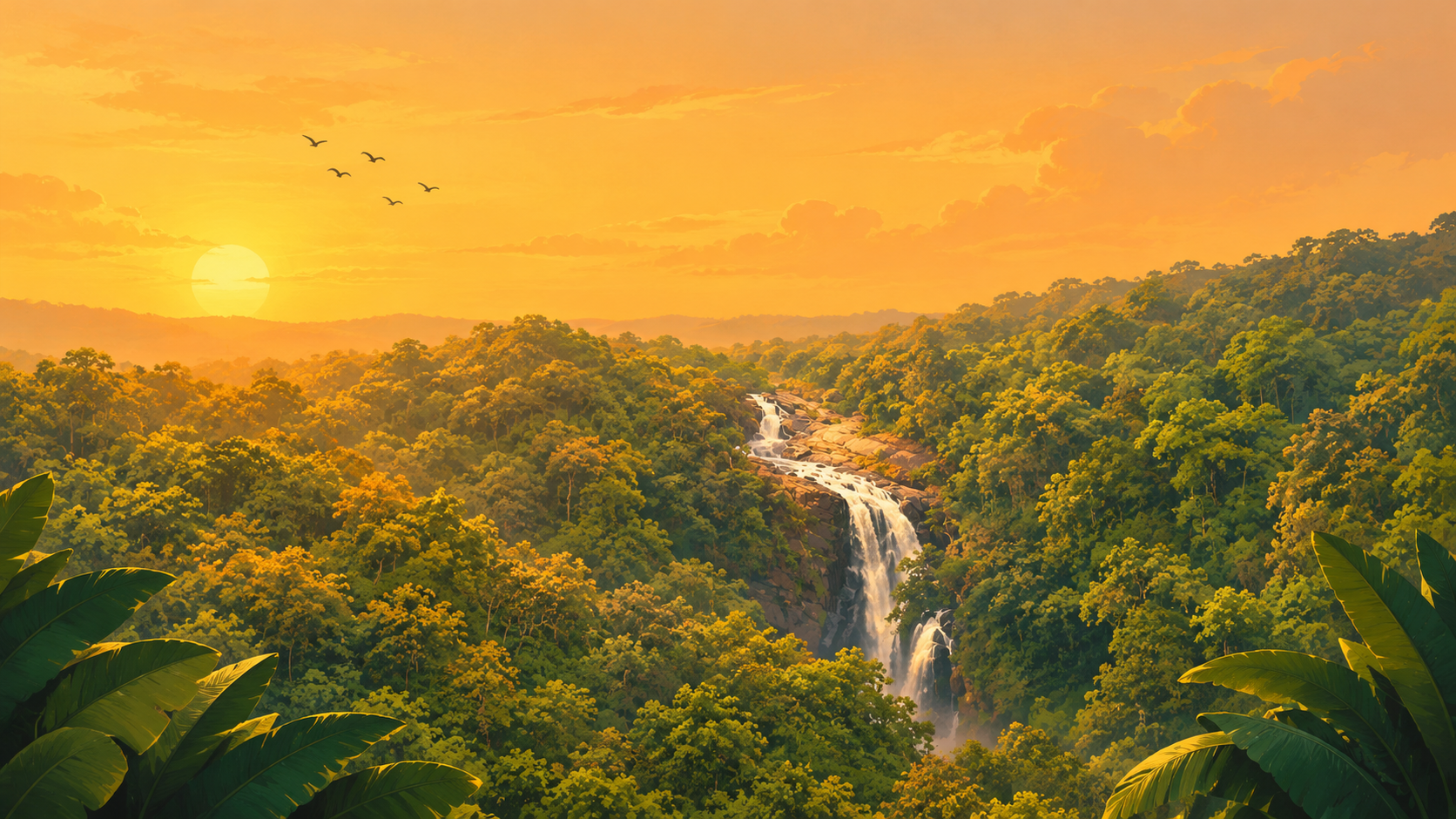
Sinharaja Forest Reserve is Sri Lanka's last large stretch of primary lowland rainforest, on the wet south-western slopes where the Ratnapura, Galle and Matara districts meet. UNESCO listed it in 1988. The things to do in Sinharaja all happen on foot with a licensed guide: early birding walks, waterfall trails and two peak climbs. Stay one or two nights beside an entrance so you are on the trail at first light.
The reserve covers about 8,864 hectares of steep ridges between roughly 300 m and 1,170 m, and it rains here most of the year, somewhere between 3,600 and 5,000 mm annually. More than 60% of the trees grow nowhere else. Most of the island's endemic birds turn up too, including the Sri Lanka blue magpie, red-faced malkoha and green-billed coucal. Expect to hear far more than you see: the canopy is tall, the light is dim and the birds travel high.
Sinharaja has several gates on opposite sides of the forest, a long drive apart, so pick one and sleep near it. The Kudawa Conservation Centre on the northern side, reached through Kalawana and Weddagala, is the main gate with the best-known trails. The short Wathurawa trail is about 2.5 km, the Moulawella Peak trail is about 8 km to a 760 m viewpoint, and the full-day Sinhagala trail is about 14 km to a rocky summit at 742 m with a view over unbroken canopy. A separate trail leads to a giant nawada tree.
The Pitadeniya Conservation Centre near Deniyaya serves the south-east. Its waterfall trail is narrow, wet and slippery in places, and runs past Pathan Oya Ella and Kekuna Ella on a loop of roughly 5 km, with a longer version to Malmora Ella. The Morningside entrance near Rakwana is the highest and quietest gate, with a long 15 km trail towards Denuwakanda.
Tip
Ask at the ticket desk for a guide who specialises in birds, and name the endemics you want to see. A good birding guide knows where the frogmouths roost by day.
Sinharaja is famous for its mixed-species feeding flocks. Twenty or more species move through the trees together, usually led by the noisy orange-billed babbler and the Sri Lanka drongo. When one passes, stand still and let it come to you. You are also likely to see purple-faced langurs and giant squirrels, and a green or hump-nosed pit viper coiled beside the path. Leopards live here but are almost never seen. Book a guided bird-watching walk if birds are the main reason you are coming.
Kudawa is roughly four hours by road from Colombo: leave the Southern Expressway at Dodangoda and head inland through Matugama and Kalawana. Phone signal drops out on the last stretch past Pothupitiya, so download your map before you go. For the Pitadeniya side, buses run from Matara to Deniyaya several times a day, a slow winding climb inland from the south coast. Most travellers hire a driver and add Sinharaja between the south coast and Udawalawe or the hill country.
Add Sinharaja to your trip plan and see it on a map alongside your other stops: Start planning your trip.
Base yourself in the guesthouses and eco-lodges around Kudawa and Weddagala for the northern trails, or in Deniyaya for Pitadeniya and Morningside. Many lodges near the forest edge run guided night walks for frogs, civets and sleeping birds, which are worth doing on your first evening.
January to April is the driest stretch, and August and September are usually good as well. May to July and October to November bring the heaviest rain, and trails turn to mud. Rain is possible on any day, so pack a light waterproof whatever the month.
Leeches are everywhere, even in the dry months. Wear long trousers tucked into leech socks, closed shoes and repellent, and check yourself carefully after every walk. There are no shops or restaurants inside the reserve, so bring water in a reusable bottle and snacks, and eat only at the rest huts. A licensed guide is compulsory, foreigners pay a separate ticket that includes the guide, and you need your passport to buy it. Carry rupees, because card machines are unreliable.
Do not bathe in the streams unless your guide says the spot is safe, do not feed the monkeys, and take every bit of rubbish out with you. Removing plants or insects from the reserve is illegal.
Save the trails you want to walk, add a driver for the drive in, and send enquiries to local guides straight from your itinerary: Plan your Sri Lanka trip on VisitLanka.
Sinharaja