Tuskers and elephants in Sri Lanka: engineers of the forest
Elephants in Sri Lanka plant forests, feed dung beetles and shelter frogs. After the death of the tusker Kavantissa, here is what these ecosystem engineers do, why they matter, and where to watch 300 of them at once in Minneriya. Plan your Sri Lanka trip on VisitLanka.
By VisitLanka team9 min read
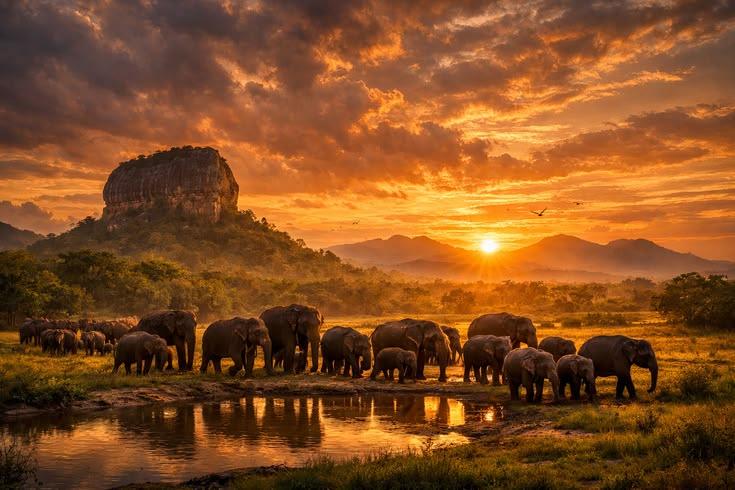
Elephants in Sri Lanka do far more than look impressive on a safari. They plant forests by carrying seeds kilometres from the parent tree, feed dung beetles and shelter frogs in their droppings, open the canopy so seedlings can grow, and even leave footprints that become frog nurseries. Ecologists call them ecosystem engineers and a keystone species. Remove them and the dry-zone forest slowly comes apart.
That idea landed hard this month. On 16 October 2026, Kavantissa, often described as the tallest wild tusker in Sri Lanka, died near Galgamuwa while vets were treating a wound believed to be from a gunshot. An expert team is investigating. Photographs of his tusks went round the world. What he did for the forest, every single day for around fifty years, was never photographed at all.
What makes a tusker different?
All Sri Lankan elephants belong to the island's own subspecies, Elephas maximus maximus. Females have no tusks, and only a small minority of males grow them. Most bulls carry short "tushes" or nothing at all. That rarity is why a tusker like Kavantissa becomes famous, and why poaching and conflict hit tuskers especially hard.
The Maligawa tuskers carry the golden casket of the Sacred Tooth Relic through Kandy during the Esala Perahera, from the Temple of the Sacred Tooth Relic (Sri Dalada Maligawa). A wild tusker carries something less visible: the future of the forest he walks through.
How do elephants plant forests?
Start with food. An adult elephant eats for most of its waking hours, and it does not digest every seed it swallows. Many pass through the gut intact and land, ready-fertilised, in a dung pile far from the parent plant.
Researchers led by Ahimsa Campos-Arceiz combined feeding trials with radio-tracking data from Sri Lanka's dry monsoon forest and Myanmar's rainforest. They found that elephants can move seeds over a kilometre away, and as far as roughly 6 km. For a seed with no legs and no wings, that is an extraordinary journey, and few other animals in Asia can match it.
The pattern holds on the ground in Sri Lanka. A study in the Kumaragala Forest Reserve in Matale District found seeds or seedlings in about 63% of the elephant dung piles examined, and 22 plant species germinated from them. Most of the wild species were trees, with Careya arborea among the most common.
| What an elephant does | What changes in the ecosystem |
|---|---|
| Swallows fruit and seeds | Seeds travel up to several km and germinate in fertilised dung |
| Drops large dung piles | Food and shelter for dung beetles, other insects and frogs |
| Breaks branches, pushes over small trees | Light reaches the forest floor, new seedlings get space |
| Walks heavy trails | Paths used by other animals; footprints hold rainwater |
| Digs for water in dry riverbeds | Water becomes available to smaller animals |
A dung pile is an ecosystem
If you study insects, an elephant dung pile is where the story gets interesting. Fresh dung pulls in dung beetles within a short time. They break it up, roll or bury it, and in doing so push nutrients and buried seeds into the soil. Some of those seeds get a second, shorter lift from the beetles, which can move them away from seed-eating rodents.
The pile also holds moisture long after the ground around it has dried out. In the arid southeast of Sri Lanka, Campos-Arceiz checked 290 elephant dung piles in the dry season and found six frogs living in five of them, from three species including the ornate narrow-mouthed frog (Microhyla ornata). None of the 180 cattle and buffalo dung piles he checked had any. For small animals in the dry zone, an elephant's droppings are a cool, damp refuge.
How elephants open up the forest
Elephants strip bark, snap branches, push over small trees and trample saplings. Up close it looks like damage. Across a landscape, it creates gaps in the canopy where sunlight reaches the understorey. Grasses, shrubs and light-loving seedlings move in, and so do the grazers and insects that depend on them.
Even a single footprint counts. In Myanmar's Htamanthi Wildlife Sanctuary, researchers found water-filled Asian elephant tracks holding frog egg masses and tadpoles. Tracks can last a year or more, acting as small predator-free pools and as stepping stones between frog populations. To an elephant it is one step. To a tadpole it is the whole world.
Why are elephants called a keystone species?
A keystone is the wedge-shaped stone at the top of an arch. Every other stone leans on it, and if you pull it out, the arch falls. Elephants hold a similar place in Sri Lanka's dry-zone forests. Seed dispersal, nutrient cycling, open grassland and water sources all lean on them.
Large bulls matter even more than their numbers suggest. Lone males cover long distances, and during musth they travel further still, linking patches of forest that herds rarely connect. Kavantissa's range centred on the Galgamuwa area of Kurunegala District. Nobody counted how many kilometres he walked in five decades, but every one of them moved seeds, nutrients and genes across the land.
Minneriya: 300 elephants at once
If you want to see why elephants shape whole landscapes, go to Minneriya in the dry season. As the surrounding land dries out, the water in the ancient Minneriya reservoir slowly pulls back and fresh grass grows on the exposed shore. Elephants come in from across the region to feed on it.
On a good evening, 300 or more wild elephants share the grassland at the same time. Known simply as the Gathering, it is the largest known seasonal congregation of Asian elephants anywhere, and the reason Minneriya belongs on the list of every elephant researcher. It usually peaks between roughly July and September, though rainfall shifts the timing each year.
You'll need a licensed jeep and driver for the park; you can find wildlife safari operators on VisitLanka and contact them directly. For more parks, see our safaris in Sri Lanka page and add Minneriya to your route with the trip planner.
Where else to watch elephants at work
| Park | Why go | Good for |
|---|---|---|
| Minneriya | The Gathering in the dry season | Herd behaviour, large numbers |
| Udawalawe | Open grassland, reliable sightings all year | Family groups, feeding behaviour |
| Yala National Park | Mixed scrub, lagoons, rocky outcrops | Elephants alongside leopards and birds |
| Wilpattu | Quiet, natural lakes (villus) | Lone bulls, fewer jeeps |
For insect and amphibian work, the trails around the Sinharaja Forest Reserve are a useful contrast. Elephants are rare in this wet-zone rainforest today, so you can compare what a forest looks like with and without its largest engineers. A local naturalist from the tour guide listings will spot far more than you will alone.
The pressure on Sri Lanka's elephants
Sri Lanka holds one of the densest wild Asian elephant populations in the world, and much of it lives outside protected areas, in farmland, villages and scrub. That overlap brings conflict. Elephants raid crops, people defend their fields, and every year hundreds of elephants and many people die as a result. Shooting, electrocution and poisoning all play a part, and tuskers are not spared.
When a tusker dies, the loss is measured in more than ivory. Kavantissa's tusks were measured, his body was photographed thousands of times, and his height was argued over. The seeds he carried, the beetles he fed and the trails he kept open never made the news. Those services are invisible, and that is exactly why they are easy to lose.
How to watch elephants responsibly
- Keep your distance and never ask a driver to push closer. A bull flapping its ears or swinging its trunk is telling you to back off.
- Ask for the engine to be switched off at sightings, and leave when several jeeps crowd one animal.
- Never feed wild elephants, including the ones waiting by roadsides near Udawalawe and Habarana.
- Skip elephant rides and shows. Watching wild elephants behave naturally is the better experience, for you and for them.
Frequently asked questions
Why are elephants called ecosystem engineers?
Because they physically reshape their habitat. By breaking branches, trampling plants, digging for water and leaving deep footprints, elephants change the structure of the forest and create conditions other species rely on.
How far do elephants carry seeds?
Studies in Sri Lanka and Myanmar show seeds commonly travel over a kilometre and can go as far as roughly 6 km. Very few other seed dispersers in Asia move large seeds that far.
What insects live in elephant dung?
Dung beetles are the main visitors, burying dung and the seeds inside it. Fly larvae, termites and other small invertebrates also use the piles, and in dry areas even frogs shelter inside them.
When is the Minneriya elephant gathering?
The Gathering usually peaks between roughly July and September, when the reservoir shrinks and grass grows on its shore. Exact timing depends on rainfall, so check locally a few days before you go.
How many elephants are there in Sri Lanka?
The last national survey in 2011 counted just under 6,000 wild elephants. Numbers are debated, and a large share lives outside protected areas.
Are tuskers common in Sri Lanka?
No. Only a small minority of male Sri Lankan elephants grow tusks, which is why individual tuskers become well known and why each death is felt so strongly.
Kavantissa spent five decades walking the forest and quietly rebuilding it. The best way to honour that is to see wild elephants doing the same work, on their terms. Save Minneriya and the other elephant parks, find a safari operator and contact them directly: Plan your Sri Lanka trip on VisitLanka.