Temple of the Tooth, Kandy: can you actually see the Buddha's tooth?
Temple of the Tooth in Kandy: can you actually see the Buddha's tooth? Here is what the 3,000 LKR ticket covers, when the casket is shown and what to wear. 🛕 Plan your visit today.
By VisitLanka teamUpdated 8 min read
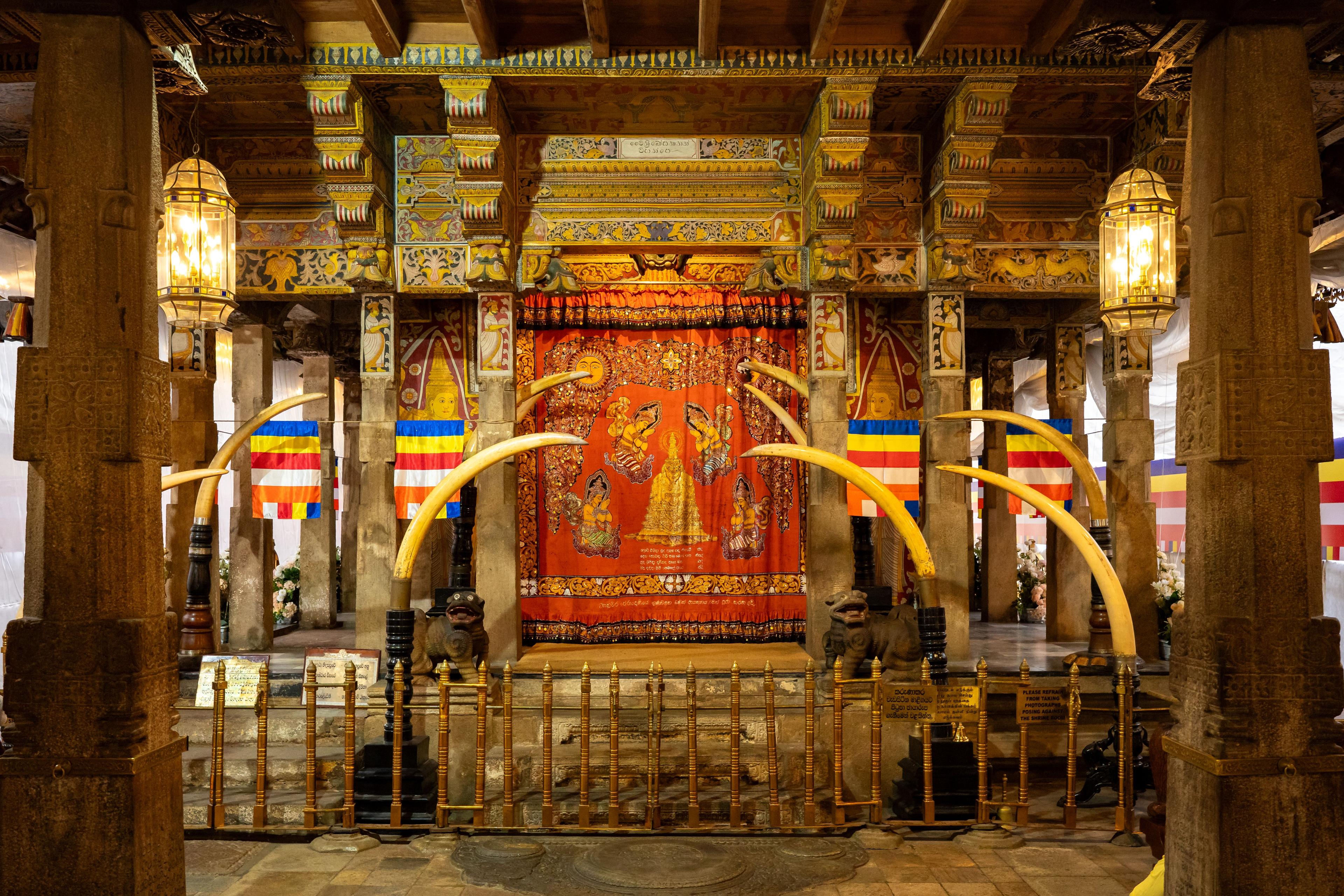
The Temple of the Tooth in Kandy (Sri Dalada Maligawa, the Temple of the Sacred Tooth Relic) holds Sri Lanka's most sacred relic, a tooth of the Buddha. You cannot see the tooth itself. Three times a day, at the 5:30am, 9:30am and 6:30pm pujas, the upstairs shrine opens and you see the golden casket that holds it. Foreigners pay 3,000 LKR (about USD 10), and one ticket covers four sites.
"Can you see the tooth?" is the question we hear most about Kandy. We took our children, so this guide is written from that visit: what the ticket gets you, when to go, what to wear, and the elephant who stole the show.
| Temple of the Tooth at a glance | |
|---|---|
| Also called | Sri Dalada Maligawa, Temple of the Sacred Tooth Relic |
| Where | Beside Kandy Lake, in the centre of Kandy |
| UNESCO status | Part of the Sacred City of Kandy, World Heritage Site since 1988 |
| Open | Daily, 5:30am to 8pm |
| Pujas (casket shown) | 5:30am, 9:30am and 6:30pm |
| Ticket for foreigners | 3,000 LKR, about USD 10 (SAARC nationals 2,500 LKR) |
| Children | Our kids went in free |
| What the ticket covers | The temple, Sri Dalada Museum, World Buddhist Museum, Raja Tusker Museum |
| Time needed | 1 to 2 hours |
| Dress | Shoulders and knees covered, shoes off |
| Photos | Not allowed in the relic chamber |
What you actually see in the relic chamber
You see a golden casket shaped like a small stupa, not the tooth. The relic sits sealed inside it in the upper-floor shrine, and the shrine doors only open during the three daily pujas. Outside those times you can walk the temple, but the chamber is closed.
The tooth itself is shown in public only during a rare exposition called the Siri Dalada Vandanawa. The last one ran for ten days in April 2025, the first in 16 years, and drew huge queues. Don't plan a trip around one; they are announced by the temple, often at short notice.
What happens at a puja
The puja starts downstairs with drums. The drummers play traditional hevisi rhythms below the shrine, and that sound is your signal to move.
Then the crowd moves upstairs. Climb as soon as the drumming starts, offer your flowers at the long table, and join the line that files past the open doors of the chamber. When the casket comes into view, you can bow, as Sri Lankan pilgrims do, and keep walking. The line does not stop, so you get a few seconds.
It gets crowded, especially at the evening puja and on Poya (full moon) days. With small children this is the hard part, so keep them close and expect to be pressed in from all sides. Photos are not allowed in the chamber.
Which puja should you go to?
| Puja | Who it suits | What it's like |
|---|---|---|
| 5:30am | Early risers, people who want calm | Mostly local pilgrims, quieter, cool air |
| 9:30am | Families, day-trippers | Busy but manageable, easiest with kids |
| 6:30pm | First-timers who want atmosphere | Loudest drumming, lamps lit, biggest crowds |
Between the pujas the temple is quieter, which is good for the museums and the old shrine halls. Just know you will not see the casket then.
Tickets: what the 3,000 LKR covers
Buy your ticket at the counter at the entrance, in cash. Foreigners from outside South Asia pay 3,000 LKR (about USD 10); SAARC nationals pay 2,500 LKR; Sri Lankans enter free. The price went up in 2026, so ignore older blogs that quote 1,500 or 2,000 LKR. Our kids went in free.
One ticket gets you into four places:
- The Temple of the Sacred Tooth Relic itself
- The Sri Dalada Museum, with gifts to the relic and photos of the temple's history
- The World Buddhist Museum, with Buddhist art and objects from across Asia
- The Raja Tusker Museum, home of the elephant Raja (more below)
Keep the ticket on you as you move between buildings.
Do you need a guide?
It helps if you want to understand what you are looking at. Guides wait by the ticket counter and can explain the order of the rituals, the shrine paintings and the stories behind the gifts in the museums. Without one, most of the temple is beautiful but hard to read.
Agree the fee and how long the tour lasts before you start, and ask if the museums are included. If you would rather arrange it ahead, you can contact tour guides in Kandy directly through VisitLanka.
What to wear and how to behave
Cover your shoulders and knees. Long trousers or a long skirt and a top with sleeves are safest. Take off your hat inside.
Shoes stay at the shoe counter by the entrance. Leave a small donation for the people who work there, and at the temple for its upkeep. The marble floors get hot in the afternoon sun, so bring socks.
A few more rules worth knowing:
- Never pose with your back to a Buddha statue, and do not touch the statues
- Visible Buddha tattoos can get you refused entry, so cover them
- Bags go through a security check at the gate, so travel light
- Speak quietly during the puja; for the pilgrims around you, this is worship
Raja, the elephant who carried the casket
For our kids, the Raja Tusker Museum was the highlight. Inside is the real Raja, preserved after he died on 16 July 1988. Maligawa Raja walked in the Kandy Esala Perahera for about 50 years and carried the casket of the Tooth Relic in the final processions for 37 of them.
He was so loved that the President declared him a national treasure in 1986, and when he died the government declared a national day of mourning. Our children were very curious, and moved by his story. If you are visiting with kids, tell them the story before you go in.
A short history of the Temple of the Tooth
According to tradition, the tooth reached Sri Lanka in the 4th century CE, hidden in the hair of Princess Hemamala. For centuries whoever held the relic held the right to rule, so it moved with the royal capitals and ended up in Kandy, the last kingdom. The temple sits inside the old royal palace complex, and the Sacred City of Kandy became a UNESCO World Heritage Site in 1988.
Common mistakes to avoid
- Arriving at midday and expecting to see the casket. The chamber only opens at puja times.
- Wearing shorts or a vest top. You will be turned away or sent to cover up.
- Throwing away the ticket after the temple. You need it for the three museums.
- Expecting to see the tooth. It is the casket, every day except a rare exposition.
Getting there and what's nearby
The temple sits on the north shore of Kandy Lake, a short tuk-tuk ride or walk from Kandy railway station. Most visitors pair it with a lake walk and Udawattakele Forest Reserve behind the temple. Coming from Colombo or Sigiriya for the day? A driver gives you the flexibility to wait for the evening puja.
If you stay overnight, rooms near the lake let you walk to the 5:30am puja: see places to stay in Kandy. The Temple of the Sacred Tooth Relic place page has the map and visiting details.
Add Kandy to your trip plan and see it on a map with your other stops: Start planning your trip.
Official sources
Puja times and notices about special events come from the temple's own website, sridaladamaligawa.lk. The UNESCO listing for the Sacred City of Kandy is at whc.unesco.org. Ticket prices change, so confirm the amount at the counter.
Frequently asked questions
Can you see the tooth in the Temple of the Tooth?
No. You see the golden casket that holds the relic, during the 5:30am, 9:30am and 6:30pm pujas. The tooth is only shown at a rare public exposition, the last of which was in April 2025.
Is the Temple of the Tooth worth visiting?
Yes, especially if you time it for a puja. You are watching a ritual that has run every day for centuries, and the pilgrims around you are there to worship. With a guide and the three museums on the same ticket, it is the best half-day in Kandy.
How long do you need at the Temple of the Tooth?
Plan on 1 to 2 hours. Allow 30 to 45 minutes for a puja and the queue upstairs, then add time for the museums, especially the Raja Tusker Museum if you have children.
Why is the Temple of the Tooth famous?
It holds a tooth of the Buddha, the most sacred relic in Sri Lanka. For centuries it was a symbol of the right to rule, and every year it is honoured in the Kandy Esala Perahera, one of Asia's biggest Buddhist processions.
How much is the Temple of the Tooth entrance fee?
Foreigners pay 3,000 LKR (about USD 10) and SAARC nationals 2,500 LKR, checked in November 2026. The ticket includes the Sri Dalada Museum, the World Buddhist Museum and the Raja Tusker Museum. Pay in cash at the entrance.
Can you take photos inside the Temple of the Tooth?
In most of the complex, yes, but not in the relic chamber during the puja. Never pose with your back to a Buddha statue.
Planning Kandy as part of a longer route? Save the temple, book a guide or driver, and send enquiries straight from your itinerary: Plan your Sri Lanka trip on VisitLanka. For the next leg, read our guide to the Kandy to Ella train.