Festival immersion
Festivals in Sri Lanka: Kandy Esala Perahera, Vesak, the New Year, Nallur and Kataragama, with festival dates, where to watch, etiquette and booking tips.
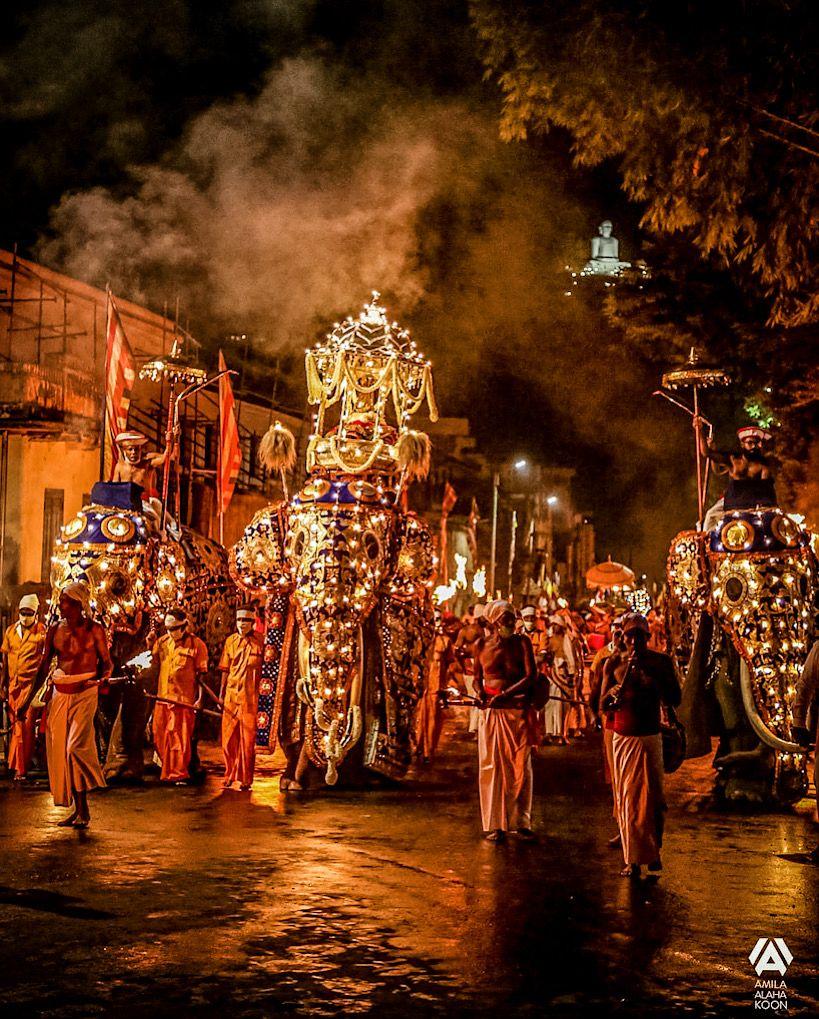
Timing your trip around a festival is one of the best ways to see Sri Lanka at its most alive. The Kandy Esala Perahera brings dozens of elephants, drummers and fire dancers onto the streets every night for over a week, Vesak fills the island with lanterns, and the Sinhala and Tamil New Year in April turns villages into one big family celebration. Most festivals follow the lunar calendar, so dates move each year.
Which festivals are worth planning a trip around?
| Festival | When | Where |
|---|---|---|
| Duruthu Perahera | January full moon | Kelaniya Raja Maha Vihara, near Colombo |
| Thai Pongal | Mid-January | Tamil areas, especially Jaffna |
| Sinhala and Tamil New Year (Avurudu) | 13 to 14 April | Island-wide |
| Vesak | May full moon | Island-wide, best in Colombo and Kandy |
| Poson | June full moon | Mihintale and Anuradhapura |
| Kataragama festival | July to August | Kataragama Temple, near Yala |
| Kandy Esala Perahera | July or August | Kandy |
| Nallur festival | About 25 days around August | Nallur Kandaswamy Temple, Jaffna |
| Deepavali | October or November | Tamil areas island-wide |
Kandy Esala Perahera
The Esala Perahera honours the Sacred Tooth Relic kept at the Temple of the Sacred Tooth Relic. It runs over ten nights: five nights of the smaller Kumbal Perahera, then five nights of the grander Randoli Perahera, ending with the final Grand Randoli procession and a day procession. In 2026 it ran from 18 to 28 August. Dates for 2027 are set by the temple once the lunar calendar is fixed.
Each night brings caparisoned elephants, Kandyan dancers, whip crackers, fire jugglers and drummers along a route around the temple and Kandy Lake.
How do you get a seat for the Perahera?
Seats along the route are sold in shops, hotels and official stands, and prices rise sharply towards the final nights. Book a seat and a room early, ideally months ahead. Standing on the pavement is free but means arriving hours early to hold a spot. Read about the city in our Kandy guide.
Vesak and Poson
Vesak marks the birth, enlightenment and passing of the Buddha. Streets fill with hand-made lanterns, illuminated pandals (huge painted panels) tell stories from the Buddha's life, and roadside stalls called dansal hand out free food and drinks to everyone. Poson, a month later, celebrates the arrival of Buddhism and centres on Mihintale near Anuradhapura, where thousands of pilgrims climb to the summit.
Sinhala and Tamil New Year (Avurudu)
In mid-April, families clean their homes, cook kiribath (milk rice) and sweets, light the hearth at an auspicious time and visit relatives. Villages hold games and contests. Many businesses close for a few days, so transport and services are busier and slower.
Northern and Hindu festivals
The Nallur festival in Jaffna runs for about 25 days, with daily processions, music and the huge chariot festival near the end. Kataragama's festival draws Buddhists, Hindus and Muslims, and includes fire-walking on the final nights. Deepavali and Thai Pongal are best experienced in Jaffna or Tamil areas of Colombo.
Festival etiquette
- Dress modestly: white or light clothing for Buddhist events, shoulders and knees covered everywhere.
- Remove shoes and hats at temples and kovils. At Hindu temples, men may be asked to remove shirts.
- Do not use flash on elephants or dancers during processions.
- On Poya (full moon) days, alcohol is not sold and many shops close.
- These are religious events first. Keep your voice down and give way to pilgrims.
Planning your trip
Festivals change the rhythm of a trip: higher prices, full hotels and busy roads, but far more atmosphere. Book stays and private drivers early, and check exact dates with the organising temple before you lock in your route. Find hotels near the festival areas and cultural tours on VisitLanka.
Build your route around the festival dates: Plan your Sri Lanka trip on VisitLanka.
Common questions
When is the Kandy Esala Perahera?
It is held in July or August each year, timed by the lunar calendar. In 2026 it ran from 18 to 28 August, with the Grand Randoli procession on 27 August.
What is the biggest festival in Sri Lanka?
The Kandy Esala Perahera is the largest and most famous, drawing huge crowds to Kandy for ten nights.
Is Vesak a good time to visit Sri Lanka?
Yes, especially in Colombo and Kandy, where lanterns, pandals and free food stalls make the evenings special. Expect alcohol sales to be banned on the day.
Can tourists join in festival celebrations?
Yes. Visitors are welcome to watch processions, accept food at dansal stalls and visit temples, as long as they dress and behave respectfully.
Do festival dates change every year?
Most do, because they follow the lunar calendar. Only a few, such as the Sinhala and Tamil New Year in mid-April, stay roughly fixed.